Can Indiana Police Legally Pull You Over for Driving Too Slowly Late at Night in Evansville?
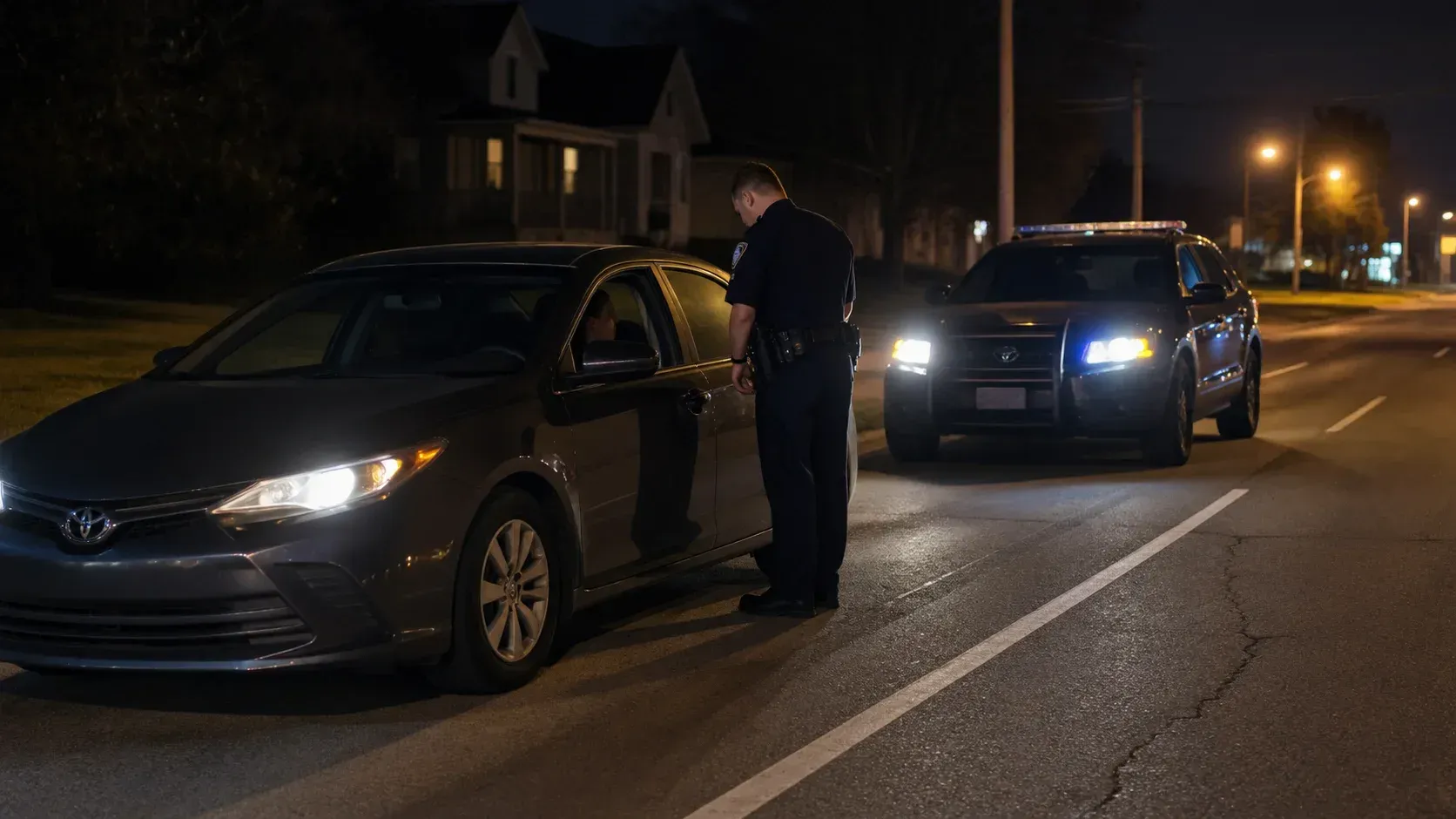
Table of Contents
- Introduction
- What Reasonable Suspicion Means for a Traffic Stop in Indiana
- When Driving Slowly by Itself Is Not Enough
- When Slow Driving Does Become Reasonable Suspicion
- Why Late at Night Changes What an Officer Notices
- Late Night Traffic Stop Rights: What You Can and Cannot Be Required to Do
- Why an Unlawful Stop in Indiana Matters to Your Case
- What Not to Do at the Roadside
- What Actually Helps Your Attorney Later
- Conclusion
- If You Think a Stop Was Unlawful, Get It Reviewed Early
- Legal Disclaimer
- Frequently Asked Questions
Key Takeaways
- An officer generally needs reasonable, articulable suspicion of a violation or of criminal activity to make a traffic stop. A hunch is not the standard.
- Driving slowly on its own is rarely enough. Combined with weaving, inconsistent speed, or impeding traffic, it frequently is.
- The roadside is not where legality gets decided. That argument belongs in court, made by your attorney, after the record exists.
- If a stop is found unlawful, evidence that came from it may be challengeable. That is often the strongest issue in a case built entirely on what the stop produced.
- What you say and do in the first two minutes shapes what your attorney has to work with later.
Introduction
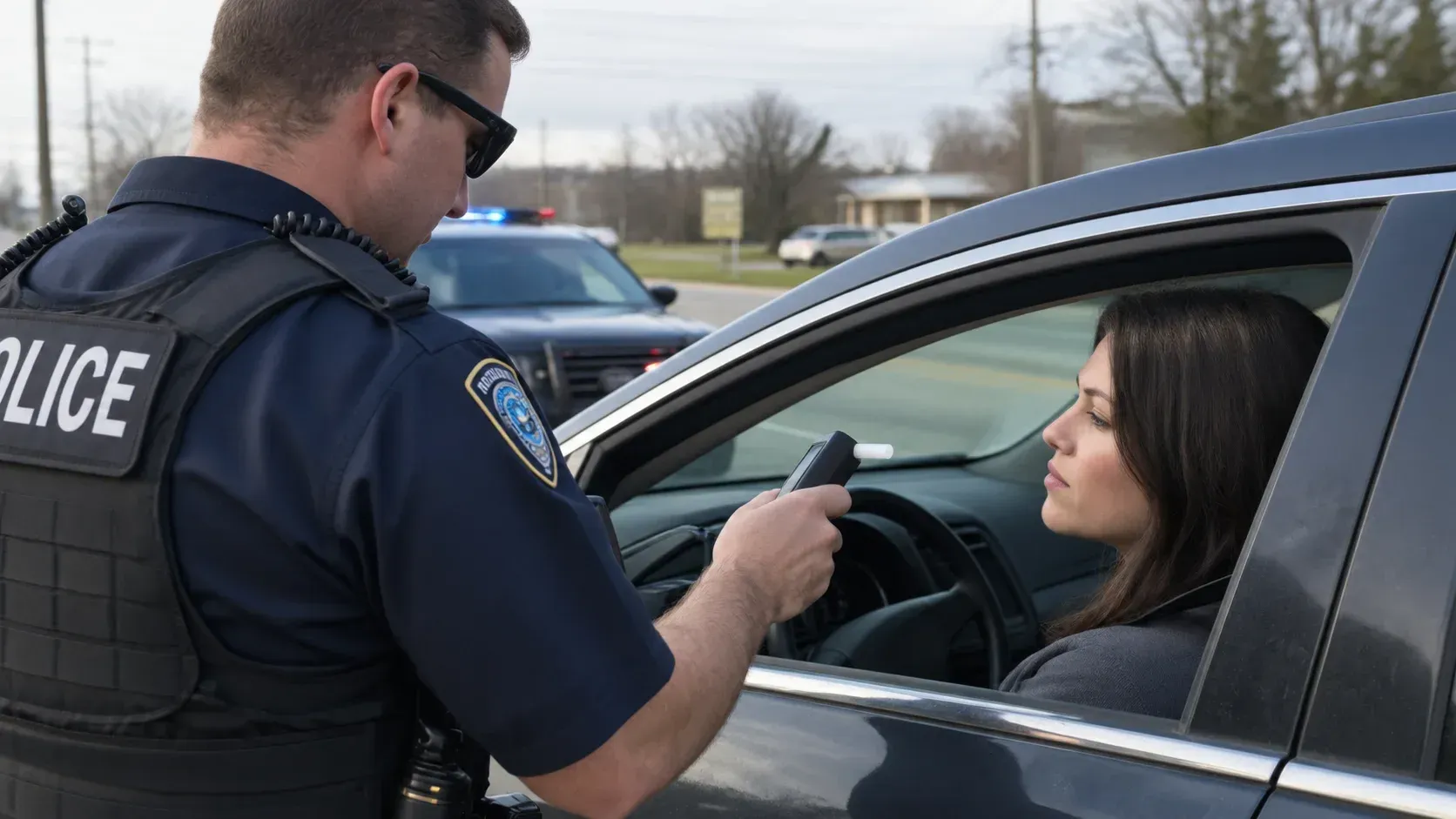
Indiana police generally need reasonable, articulable suspicion of a traffic violation, impairment or other criminal activity before they can pull you over, and driving slowly by itself is rarely enough to meet that standard. Combine it with weaving inside the lane, speed that keeps changing, drifting toward the center line or holding up traffic behind you, and it frequently is. Whether a particular stop was lawful is a question a court answers afterward, looking at what the officer can actually articulate, which is why anyone charged after a questionable stop should have a DUI defense attorney examine how the stop began.
This article covers how that standard generally works in Indiana, what turns slow driving into a valid reason for a stop, and what matters at the roadside if it happens to you. It is general information about Indiana law and procedure, not legal advice about your situation.
What Reasonable Suspicion Means for a Traffic Stop in Indiana
Reasonable suspicion sits between a hunch and probable cause. An officer does not need to be certain a violation occurred, and does not need enough to arrest you. But they do need specific facts they can put into words.
That word "articulable" is the load-bearing one. The officer has to be able to say what they observed and why it suggested something. "He looked suspicious" does not satisfy it. "He was traveling roughly twenty miles per hour under the limit, drifted onto the fog line twice, and braked without an apparent reason" does.
A few things follow from that:
- The standard is objective. The question is generally whether the facts would support the suspicion, not what the officer privately believed.
- It is judged on what was known at the time. Finding something after the stop does not retroactively justify a stop that lacked a basis.
- A completed traffic violation is its own basis. If you actually committed an infraction, that alone generally supports a stop regardless of what the officer was really looking for.
- The facts get combined. Courts generally consider the total picture rather than assessing each observation in isolation.
That last point is why "slow driving is legal" and "you can be stopped for driving slowly" are both true, depending on what else was happening.
When Driving Slowly by Itself Is Not Enough
Driving under the speed limit is not, by itself, a violation. Plenty of ordinary reasons produce it, and an officer who stops someone purely because they were going slowly is generally on thin ground.
Legitimate reasons people drive slowly:
- Unfamiliarity with the area, looking for a turn or an address
- Weather, fog, wet or icy roads
- Poor visibility or inadequate lighting on the road
- Watching for deer, which is a real consideration on this side of Indiana
- Construction, potholes or a known rough patch
- A mechanical concern with the vehicle
- Carrying an unsecured or fragile load
- A new driver, or an older driver, driving conservatively
- Using navigation and slowing to read it
None of that is unlawful, and a stop based on nothing more than one of these may well be challengeable. The trouble is that from a patrol car at one in the morning, several of these look identical to impairment.
When Slow Driving Does Become Reasonable Suspicion
What typically turns it into a valid basis is slow driving plus something else. The combinations officers commonly cite:
- Weaving within the lane, or touching the lane lines repeatedly
- Speed that keeps changing without an apparent reason, speeding up and slowing down
- Drifting toward the center line or the shoulder
- Impeding traffic, which can be an infraction in its own right, particularly on a road with a minimum speed or where a queue has formed
- Braking erratically, or stopping where there is no reason to stop
- Sitting through a green light
- Wide or delayed turns
- Driving without headlights, or with high beams on in traffic
- A slow reaction to the patrol car's presence
- Time and place, such as leaving an area with bars at closing time
Any one of these on its own may be weak. Several together are what a report will describe, and what a court will generally weigh as a whole.
Why Late at Night Changes What an Officer Notices
Time of night is not itself a reason to stop anyone. But it does change the context an officer is working in, and it is honest to acknowledge that.
Late at night there is less traffic, so unusual driving stands out more. Patrol attention is often concentrated near closing time. And the ordinary explanations for odd driving, such as heavy traffic or a school zone, are absent, so the same behaviour reads differently at 1am than it does at 5pm.
What this means practically is that at that hour, the margin for behaviour that looks like impairment is narrower. Driving slowly and carefully because you are tired, unfamiliar with Evansville, or being cautious after a long shift can produce exactly the pattern an officer is trained to watch for. That does not make a stop lawful. It does make it more likely to happen.
Late Night Traffic Stop Rights: What You Can and Cannot Be Required to Do
Knowing the general shape of this before you need it is worth more than reading it afterward.
You are generally required to pull over promptly and safely when signaled, to provide license, registration and proof of insurance when asked, and to remain in the vehicle unless directed otherwise.
You are generally not required to answer questions about where you have been, what you have been doing, or whether you have had anything to drink. You can decline politely. You may also decline consent to a search of your vehicle, and declining is not by itself evidence of anything.
Standardized field sobriety tests are generally treated as voluntary, and are separate from the certified chemical test that Indiana's implied consent law attaches to. Those are different decisions with different consequences, which is covered in more depth in the firm's article on what your rights are when being arrested in Indiana.
The tone matters more than most people believe. Declining to answer questions is very different from arguing, and the second one helps nobody.
Why an Unlawful Stop in Indiana Matters to Your Case
Here is the reason this is worth understanding rather than just being annoyed about.
If a court finds a stop lacked reasonable suspicion, evidence obtained as a result of it may be subject to challenge. In a case built entirely on what the stop produced, a test result, an officer's observations, something found in the vehicle, the legality of the stop is frequently the most significant issue in the case.
Which is why one of the first things a defense attorney examines is how the encounter began, not just what happened afterward. That review typically involves the officer's written report, dash camera and body camera footage where it exists, the radio log and timestamps, and whether the stated basis for the stop holds together against the rest of the record.
Two honest caveats. Not every flawed stop leads to evidence being excluded, and the analysis is fact-specific. And nobody can tell you whether your stop was lawful without seeing the actual record. What can be said generally is that it is a question worth asking early, because footage does not always stay available indefinitely.
What Not to Do at the Roadside
The roadside is the worst possible place to litigate whether a stop was justified. What helps:
- Do not argue about the legality of the stop. That argument belongs in court, where it can actually succeed. At the roadside it changes nothing and can make the situation worse.
- Do not physically resist or refuse to pull over, regardless of how unjustified the stop feels.
- Do not volunteer information. "Only two beers" is one of the most common statements in these reports.
- Do not consent to a search simply because it feels easier or more cooperative.
- Do not lie. Declining to answer is lawful. Giving a false answer is a different problem.
- Do not reach around the vehicle for documents before being asked, or without saying what you are doing.
- Do not post about it afterward.
Being polite and being cooperative in the sense of answering everything are not the same thing, and you can do the first without doing the second.
What Actually Helps Your Attorney Later
If you are stopped and it goes further than a warning, the details you preserve in the first day are worth real money later:
- Write down the timeline as soon as you are able. Location, time, how long each phase lasted, what was said and by whom.
- Note the stated reason for the stop, in the officer's own words if you can remember them.
- Record what you were doing beforehand, including where you had been and why you were driving the way you were.
- Note the road conditions, weather, lighting and traffic at the time.
- Keep every document you were given.
- Identify any passengers or witnesses.
- Note where cameras might exist, including nearby businesses.
- Contact an attorney promptly, particularly if footage may be relevant, since retention periods are not unlimited.
Almost nobody does this, and the ones who do give their attorney a considerably better starting point.
Conclusion
Driving slowly is not a crime, and on its own it is rarely enough to justify a stop. What generally justifies one is slow driving combined with something else an officer can describe: weaving, inconsistent speed, drifting, impeding traffic. Late at night, ordinary careful driving is more likely to be read that way, which is worth knowing before it happens.
If you believe a stop lacked a basis, the place to raise it is in court and the time to start is early, while footage and records still exist. Being right about it at the roadside accomplishes nothing.
If You Think a Stop Was Unlawful, Get It Reviewed Early
If you were stopped and charged in Evansville, Boonville, Princeton, New Harmony, Mount Vernon or the surrounding area, how the stop began is worth examining before the record gets harder to obtain. Collins & Associates offers a free consultation, and attorney Richard Collins has been in private legal practice since 1975 after graduating with honors from Drake University.
Call (812) 760-4760. Bring any paperwork you were given and whatever you have written down about the stop.
Legal Disclaimer
This article provides general information about Indiana law and legal procedure. It is not legal advice, it does not address the specific facts of any individual case, and reading it does not create an attorney-client relationship. Laws, procedures and time limits change and vary by circumstance. If you have been stopped, charged or are facing any legal proceeding, consult a licensed Indiana attorney about your own situation promptly.
Frequently Asked Questions
Is driving under the speed limit illegal in Indiana?
Driving below the limit is not inherently unlawful, though impeding traffic can be an infraction in some circumstances, and minimum speeds apply on certain roads. Slow driving on its own is rarely sufficient basis for a stop without something else the officer can articulate.
Can an officer stop me just because it is late at night?
Time of night alone is not a basis for a stop. It can form part of the overall context an officer describes, alongside actual observations about driving behaviour, but on its own it does not meet the reasonable suspicion standard.
Do I have to tell an officer where I have been?
Generally no. You are typically required to provide license, registration and insurance, but you are not required to answer questions about your activities. Declining politely is lawful, and it is different from arguing or giving a false answer.
What happens if the court decides the stop was unlawful?
Evidence obtained as a result of an unlawful stop may be subject to challenge, which in some cases significantly affects the prosecution. Outcomes depend entirely on the specific facts and the record, so no general answer applies to an individual case.
Should I argue with the officer if I think the stop was wrong?
No. The roadside cannot resolve it and arguing tends to make things worse. Comply with lawful instructions, decline questions politely if you choose to, write everything down afterward, and raise the issue through an attorney.
Related Posts