Does Refusing a Breathalyzer Test in Indiana Automatically Mean You Lose Your License?
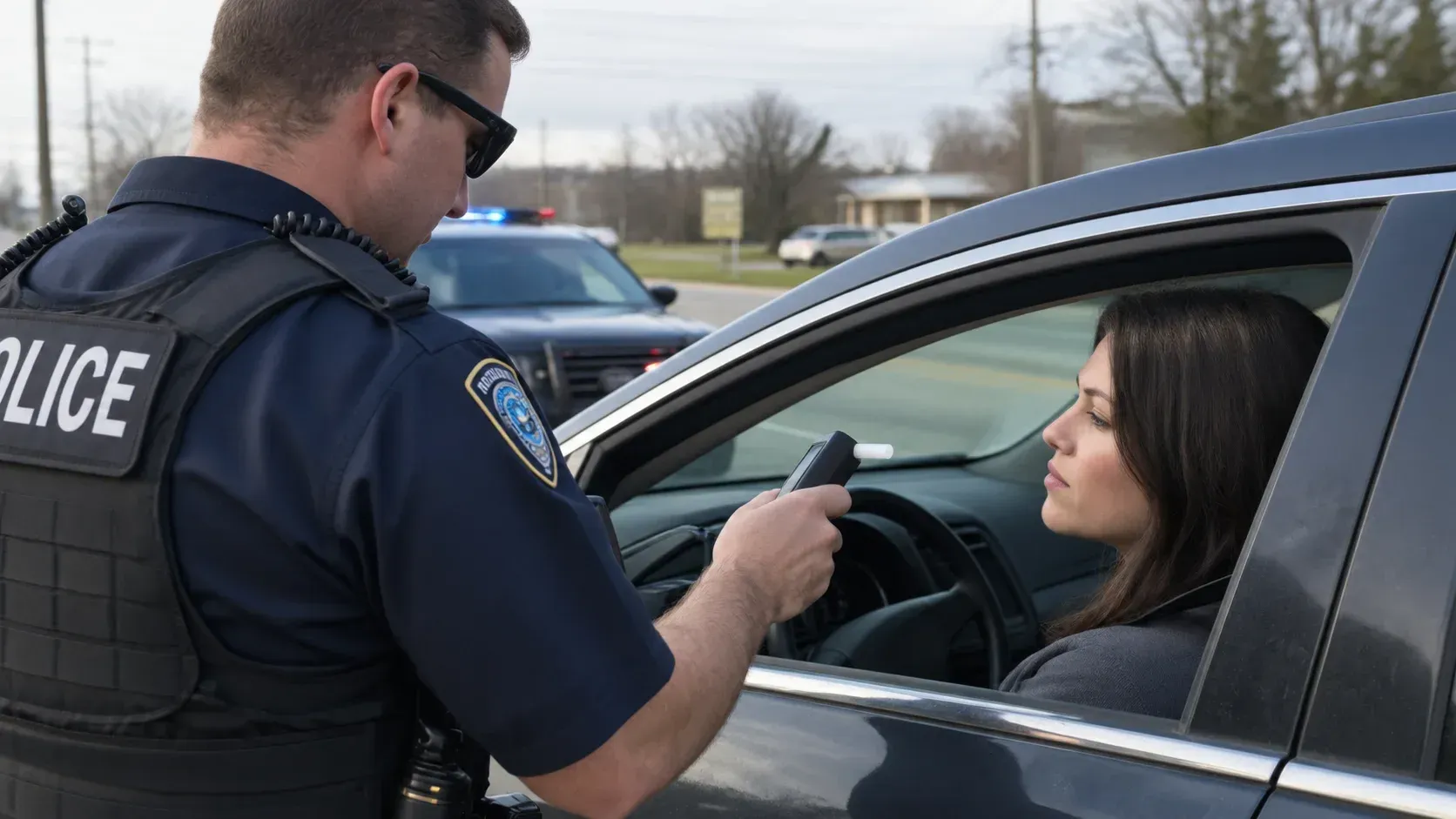
Table of Contents
- Introduction
- What Refusing a Breathalyzer in Indiana Actually Triggers
- Implied Consent Law in Indiana: What You Already Agreed To
- Two Separate Cases: The Criminal Charge and the License Suspension
- The Roadside Device and the Certified Chemical Test Are Not the Same Thing
- Field Sobriety Tests Are a Separate Question Again
- Why "Just Refuse Everything" Is Bad Advice
- What to Do in the First Days After a Refusal
- Why Indiana Calls It OWI Rather Than DUI
- Conclusion
- Talk to a DUI Defense Attorney Before You Decide Anything Else
- Legal Disclaimer
- Frequently Asked Questions
Key Takeaways
- Refusing does not mean you automatically and permanently lose your license, but it does trigger Indiana's implied consent law and an administrative suspension that is generally longer than what follows a failed test.
- The license suspension and the criminal case are two separate tracks. You can be acquitted of the criminal charge and still face the refusal suspension.
- Implied consent attaches to the certified chemical test an officer offers after establishing probable cause. The small handheld device at the roadside sits in a different category.
- Standardized field sobriety tests are generally treated differently from the chemical test, which is why "refuse everything" and "refuse the breath test" are not the same decision.
- Some responses to a suspension have short windows. This is the reason to call a lawyer within days rather than waiting for a court date.
Introduction
Refusing a breath test in Indiana does not automatically mean you permanently lose your license, but it does trigger Indiana's implied consent law, which can suspend your driving privileges administratively before anyone decides whether you were actually impaired. That suspension is handled separately from the criminal case, and it is generally longer than the suspension that follows taking the test and failing it. So the common assumption, that refusing protects your license because there is no evidence against you, has it backwards. Anyone facing this situation should speak with a DUI defense attorney quickly, because some of the responses available have short deadlines.
This article explains the general framework: what implied consent covers, why the license case and the criminal case run on different tracks, and which tests the rule actually applies to. It is general information about how the process works in Indiana, not legal advice about your situation.
What Refusing a Breathalyzer in Indiana Actually Triggers
The important word in the question is "automatically." Two things are true at once, and people usually only hear one of them.
Refusal is not an automatic conviction of anything. It is not a finding that you were impaired, and it does not decide your criminal case.
But refusal does set an administrative process in motion, run through the licensing side rather than the criminal court. In general terms, that process can suspend your driving privileges based on the refusal itself, regardless of what later happens with the charge. It is a consequence attached to the act of refusing, not to a determination of guilt.
There is a second thing worth knowing. In Indiana, as in most states, the fact of a refusal can generally be raised against you at trial. Prosecutors commonly argue that refusal suggests awareness of impairment. Your attorney can respond to that argument, but the idea that refusing leaves the state with nothing to work with is not accurate.
Implied Consent Law in Indiana: What You Already Agreed To
Implied consent is the legal principle underneath all of this, and it is simpler than it sounds.
Driving is treated as a privilege rather than a right, granted subject to conditions. One of those conditions is that by driving on Indiana roads you have already agreed to submit to a certified chemical test when an officer has the necessary legal basis to request one. You agreed when you drove, not when the officer asked.
Two practical consequences follow. First, declining the test is not a neutral act, because the state treats it as withdrawing consent you already gave. Second, an officer is generally required to inform you of the consequences of refusal before the test is offered. Whether that warning was actually given, and given correctly, is one of the things a defense attorney looks at.
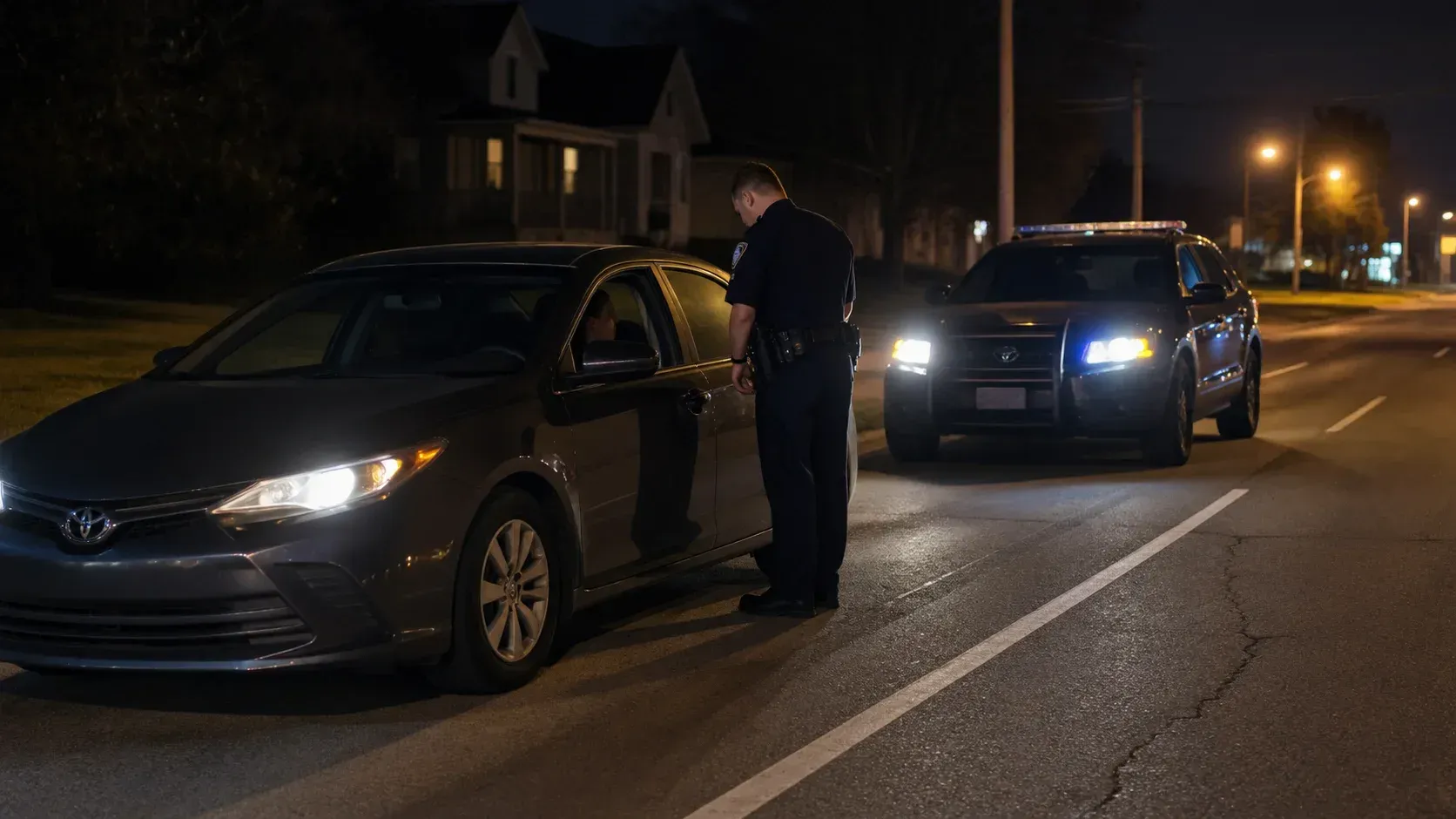
The firm's guidance on what to do if you are arrested for a DUI in Evansville covers the arrest and booking sequence in more detail, including where in that sequence the certified test usually happens.
Two Separate Cases: The Criminal Charge and the License Suspension
This is the part that surprises people most, and understanding it changes how you respond.
When a DUI stop leads to a refusal, you are generally dealing with two separate proceedings running at the same time:
- The criminal case. This is the charge itself, handled in criminal court, where the question is whether the state can prove the offense.
- The administrative license case. This is handled through the licensing process and concerns your driving privileges. The question there is much narrower.
They have different decision-makers, different standards, and different timelines. Which is why you can win one and lose the other, and why the outcomes do not cancel each other out. Being acquitted or having a charge dismissed does not by itself undo a refusal suspension.
The practical implication is about timing. The criminal case may not resolve for months. The license side often moves faster and may have response windows measured in a much shorter period. Waiting for your first criminal court date before dealing with the license question can mean a window has already closed.
The Roadside Device and the Certified Chemical Test Are Not the Same Thing
This distinction matters and almost nobody knows it.
There is usually a small handheld device used at the roadside during an investigation, and there is a certified chemical test of breath or blood administered under controlled conditions, typically after arrest. They serve different purposes, they are treated differently under the law, and implied consent generally attaches to the second one rather than the first.
That means "I refused the breathalyzer" can describe two completely different decisions with different consequences. When someone tells us they refused, the first thing we need to establish is which test, at what point, and what they were told beforehand.
If you are reading this after the fact, try to reconstruct the sequence: where you were, what was said, what device was used, whether you were under arrest at the time, and whether anyone read you a consequences warning. Those details matter more than most people expect.
Field Sobriety Tests Are a Separate Question Again
Standardized field sobriety tests, the walk-and-turn, the one-leg stand, the eye-tracking test, are generally treated differently from the certified chemical test. They are typically voluntary, and declining them generally does not carry the same implied consent consequence a chemical test refusal does.
That is a meaningful difference, and it is why blanket advice like "never take any test" is unhelpful. The tests are not equivalent, the consequences are not equivalent, and the right answer depends on circumstances nobody can assess from a blog post.
It is also worth knowing that these tests are subjective by design. They are scored by the officer administering them, and performance is affected by footwear, road surface, weather, injuries, age, weight, medical conditions and nerves. Challenging how they were administered and scored is standard defense work.
Why "Just Refuse Everything" Is Bad Advice
You will hear this advice in bars, from relatives, and in a lot of online comment sections. Here is why it is too simple to be useful.
Refusing carries its own consequence, and in Indiana that consequence is generally more severe on the license side than the suspension that follows a failed test. So the refusal is not a free move. You are trading one set of problems for another.
Refusal can also be used against you as evidence at trial. And it removes information that sometimes helps: a test result can come back lower than the officer expected, or it can be challenged on grounds of calibration, maintenance, operator certification or procedure, which is a real line of defense that does not exist if there is no result.
None of that means taking the test is always right either. It means the decision is genuinely situational and cannot be reduced to a rule. What we can say plainly is that whichever choice you made, the next step is the same: talk to an attorney before the process moves further without you.
What to Do in the First Days After a Refusal
The window here is shorter than most people assume, which is the single most useful thing in this article.
- Write down everything you remember, as soon as possible. Time, location, what was said, what you were asked, what you were told about consequences, how long the stop lasted, whether a warning was read.
- Keep every document you were given. Anything handed to you at the scene or at booking, including paperwork about your license, matters.
- Find out what your license status actually is rather than assuming. Do not keep driving on an assumption.
- Do not discuss the incident on social media, with anyone other than your attorney, or in recorded calls.
- Note any witnesses, including passengers, and any video that might exist.
- Call a lawyer within days, not weeks. Some responses on the license side have short windows, and missing one can remove an option entirely.
- Bring everything to the first meeting, including the timeline you wrote down.
Point six is the reason this article exists. People often wait for their court date because that feels like the official start of the process. On the license side, the process has already started.
Why Indiana Calls It OWI Rather Than DUI
A quick note that clears up real confusion. Most people search for and talk about DUI, but Indiana's own terminology is generally OWI, Operating While Intoxicated. You will see both used, including on this site, because DUI is what people actually say.
The distinction is not just vocabulary. "Operating" is a broader concept than "driving," which is why charges can arise in situations people assume are safe, such as sitting in a parked vehicle. If you are researching your own situation and finding conflicting information, part of the confusion may be that you are reading material written for states that frame the offense differently.
Conclusion
Refusing a breath test in Indiana does not automatically and permanently cost you your license, but it is not the protective move people think it is. It triggers implied consent consequences on the licensing side, it can be raised against you in the criminal case, and it gives up a test result that might otherwise have been challenging.
The more useful takeaway is structural. Two separate processes are now running, they move at different speeds, and the faster one concerns your ability to drive to work next week. That is why the first call should happen within days.
Talk to a DUI Defense Attorney Before You Decide Anything Else
If you have refused a test or you are dealing with a DUI stop in Evansville, Boonville, Princeton, New Harmony, Mount Vernon or the surrounding area, get advice before the process moves any further. Collins & Associates offers a free consultation, and attorney Richard Collins has been in private legal practice since 1975 after graduating with honors from Drake University.
Call (812) 760-4760. Bring whatever paperwork you were given and whatever you have written down about the stop.
Legal Disclaimer
This article provides general information about Indiana law and legal procedure. It is not legal advice, it does not address the specific facts of any individual case, and reading it does not create an attorney-client relationship. Laws, procedures and time limits change and vary by circumstance. If you are facing a charge or a license suspension, consult a licensed Indiana attorney about your own situation promptly.
Frequently Asked Questions
Will I definitely lose my license if I refuse a breath test in Indiana?
Refusal triggers an administrative suspension process under implied consent, handled separately from the criminal case. It is not automatic in the sense of being beyond challenge, but it is a real and separate consequence. Speak to an attorney quickly, because some responses have short windows.
Can I be convicted of OWI if I refused the test and there is no result?
Yes. A case can proceed on other evidence, including the officer's observations, driving behaviour, field sobriety test performance and video. Refusal itself may also generally be raised at trial, which is why refusing does not leave the state without a case.
Is the roadside handheld device the same as the official breath test?
Generally no. The portable device used during a roadside investigation and the certified chemical test administered under controlled conditions are treated differently, and implied consent typically attaches to the certified test. Which one you declined matters, so tell your attorney precisely.
Do I have to take field sobriety tests in Indiana?
They are generally treated as voluntary and separate from the chemical test, so declining them does not usually carry the same implied consent consequence. That said, the decision has other implications and depends on circumstances, which is why blanket advice is unreliable.
How soon do I need to contact a lawyer after a refusal?
Within days rather than weeks. The administrative license process can move faster than the criminal case, and some available responses have short deadlines. Waiting for your first criminal court date may mean a window has already passed.
Related Posts